First, stop the overflow
If the bowl is rising, do not flush again. Lift the tank lid and push the flapper down to stop more water entering, or close the supply valve behind the toilet. Put towels around the base and open a window if the room is closed in.
Then check the other fixtures. If the tub or sink is also slow or gurgling, the clog may be in the main line and the plunger will not help. In that case, stop all water use and call a plumber.
Plunge the right way
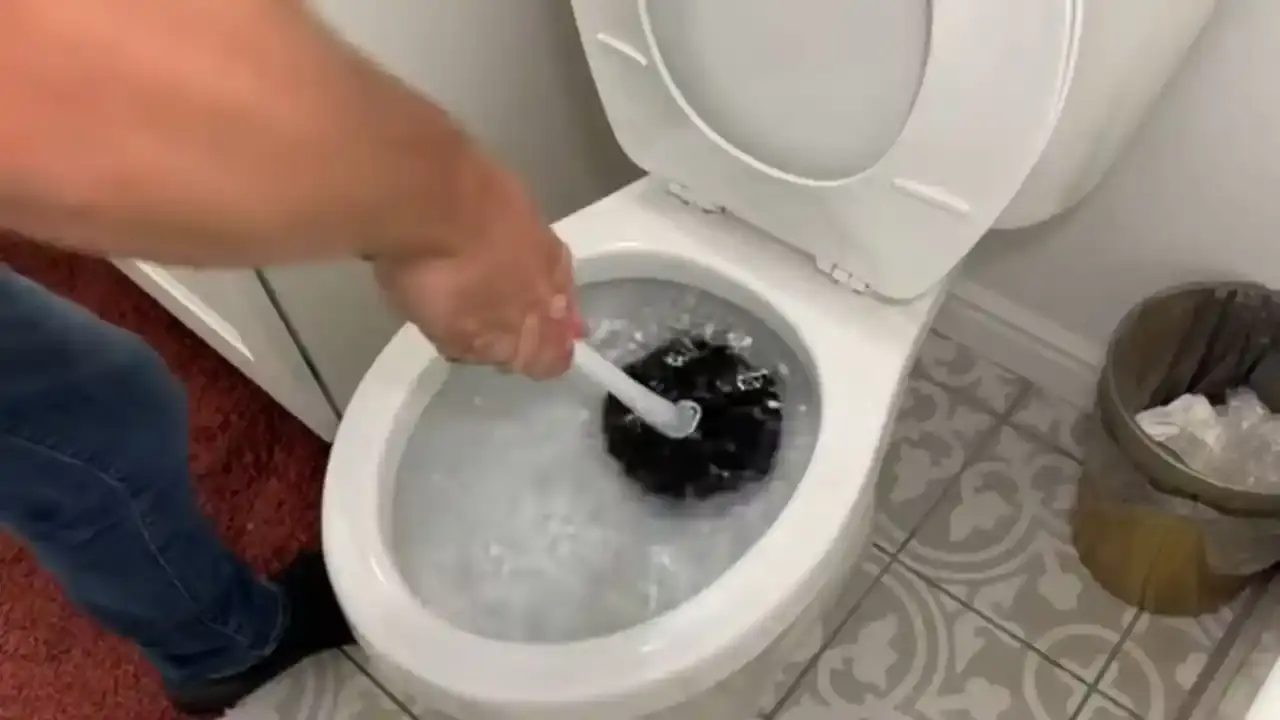
A flange plunger, with a rubber flap that extends from the cup, seals the toilet drain better than a flat sink plunger. Make sure there is enough water to cover the cup, add some if there is not and seat the plunger so it seals the opening. Push gently first to expel the air, then use firm, steady strokes for about twenty seconds.
Break the seal and watch the water level. If it drains, flush once to confirm. If it does not, repeat a few times. Patience works better than force, because hard strokes can splash and may not move the clog.
If plunging does not work
The next step is a closet auger, which reaches the trap without scratching the bowl.
- Feed the auger tip into the drain and crank gently so it moves through the trap.
- Push until you feel resistance, then crank to hook or break up the clog.
- Pull the auger out slowly and clean it.
- Flush once to test the flow.
- Stop if the auger meets a hard object it cannot move, and call a plumber.
What to try and what to avoid
Some popular fixes cause more harm than good.
| Approach | Verdict | Why |
|---|---|---|
| Flange plunger | Try first | Safe and effective for most clogs |
| Closet auger | Good second step | Reaches the trap without scratching |
| Dish soap and hot water | Sometimes helps | Lubricates soft clogs, avoid boiling water on porcelain |
| Chemical drain opener | Avoid | Can damage fittings and is hazardous to the next person |
| Repeated flushing | Avoid | Raises the risk of overflow |
Why toilets clog
Too much paper, wipes labeled flushable, hygiene products and toys are the usual culprits. Low-flow toilets can also struggle with heavy loads. A toilet that clogs often may have a partial blockage in the trap, a vent problem or a belly in the drain.
Wipes are the worst offender. They do not break down like toilet paper and collect in the drain, in the main line and in the City sewer. Tell family and guests to keep them out of the toilet, including the ones with a flushable label.
City sewer and septic systems around Post Falls
Whether your home is on City sewer or a septic system changes what a clog costs you. On septic, wipes and chemicals also harm the tank and the drain field. Panhandle Health District regulates septic systems in Kootenai County, and its staff can answer questions about yours.
If you are on City sewer and the main line backs up, the point of responsibility between your cleanout and the City main is worth confirming with the City. Toilets are built to the flush limits in the Uniform Plumbing Code (UPC), and a low-flow model can need a little more technique than an older one. Need a plumber in Coeur d'Alene tonight? Our emergency page for that city explains what happens after you call.
Clean up safely after a clog
Overflow water from a toilet bowl can carry bacteria, so treat it with care. Wear gloves, soak up the water with towels and wash the floor with a disinfectant. Wash the towels hot and wash your hands well.
If water reached carpet or a finished floor, dry it fast with fans and an open window. Wet material left in place can grow mold within a couple of days. If the overflow was sewage from a backed-up main line, keep children and pets away and call a plumber.
Why a toilet that clears slowly deserves attention
A toilet that flushes weakly or fills the bowl and then slowly drops is telling you something. The rim jets under the bowl may be clogged with mineral scale, the tank may be low on water or the trap may be partly blocked. Each of these is simple to fix, and each gets worse if ignored.
A toilet that is slow every time, in every bathroom, is a different story. That pattern points to the main line or the vent. If you hear gurgling from other drains when you flush, or you see bubbles in the tub, call a plumber before the line closes up completely.
Toilet still clogged?
Call our 24/7 line. We clear toilets and main lines at all hours.
When the clog is in the main line
If several fixtures back up at once, the main line is blocked. A toilet that gurgles when the washer drains, a basement floor drain that rises and a toilet that fills the bowl and holds are all signs. A cable machine and a camera are the tools for that job.
Our sewer line cleaning page explains how we clear main lines, and drain cleaning covers fixtures and branch lines. For toilets that leak, rock or clog repeatedly, see our toilet repair page. If you are in Coeur d'Alene, our Coeur d'Alene page explains how dispatch works from Post Falls.
Preventing the next clog
Flush only toilet paper and human waste. Keep a plunger and a closet auger in the bathroom. Use a wastebasket for wipes and hygiene products.
If you have a toilet that clogs every few weeks, ask a plumber to look at it. A camera on the line can show whether roots, scale or a low spot is behind it. A small repair can end a long run of frustration.
Clogged toilet questions from Post Falls homeowners
We advise against it. Chemicals can damage fittings and are dangerous if the water splashes later.
Wipes, heavy paper use, a partial blockage or a main line problem may be the cause. A plumber can find it.
If several fixtures drain slowly or gurgle at once, or a floor drain rises, suspect the main line.
Yes. Wipes and chemicals can harm a septic tank, and Panhandle Health District can advise on your system.
Call if the plunger and auger fail, if the toilet keeps clogging or if more than one fixture is affected.