
Sewage in the house or yard
Raw sewage backing into a tub, a floor drain or a basement is a health hazard. Stop using water, keep children and pets away, and call. Do not try to flush, plunge or pour chemicals into the system, because that can push contaminated water farther into the house.
- Stop all water use, including washing machines and dishwashers.
- Keep people and pets out of the affected area.
- Open windows for ventilation but do not touch standing sewage without gloves and boots.
- Photograph the damage for your insurer and call the 24/7 line.
Why sewer lines fail
Most sewer failures come from a handful of causes. Tree roots find a joint and grow into the pipe. Ground movement pulls sections apart or creates a low spot where waste collects. Age makes some materials brittle, and others corrode from the inside. Heavy loads such as a driveway poured over the line can crush the pipe.
The material tells a lot about the likely cause. Clay and concrete pipes fail at joints and from roots. Cast iron corrodes and scales shut. Fiber pipe, sometimes sold as Orangeburg in older homes, softens and deforms. PVC and ABS usually fail from a poor joint, a shifted bed or damage during other work.
Repair options compared
Which method fits depends on the camera findings, the depth and what is above the line.
| Option | Best for | Tradeoffs |
|---|---|---|
| Spot repair (open cut) | One broken or offset section, accessible location | Digs a short trench, quick and permanent for a small area |
| Pipe lining (trenchless) | Cracks and root intrusion in a pipe that is still round | Little digging, slightly smaller bore, not for collapsed pipe |
| Pipe bursting (trenchless) | Long runs of failed pipe under landscaping or driveways | Needs entry and exit pits, replaces the pipe with new |
| Full open-cut replacement | Collapsed, badly offset or fiber pipe | Most disruption, most certain result |
Every option starts with a camera inspection, covered on our sewer inspection page.
Cast iron and old clay: what we often find
Houses in the older parts of town may still carry cast iron or clay in the line. Cast iron develops rough scale that catches paper and grease, and the pipe wall thins until it cracks. Clay joints let roots in a little at a time. A camera usually shows these conditions clearly, with scale, root hair and offset joints visible in the image.
A pipe that is thinning but still round may be a good candidate for lining. A pipe that has lost its shape or has separated usually needs replacement. We show you the footage, point out the problem area and explain why we are recommending one approach over another.
Trenchless repair in more detail
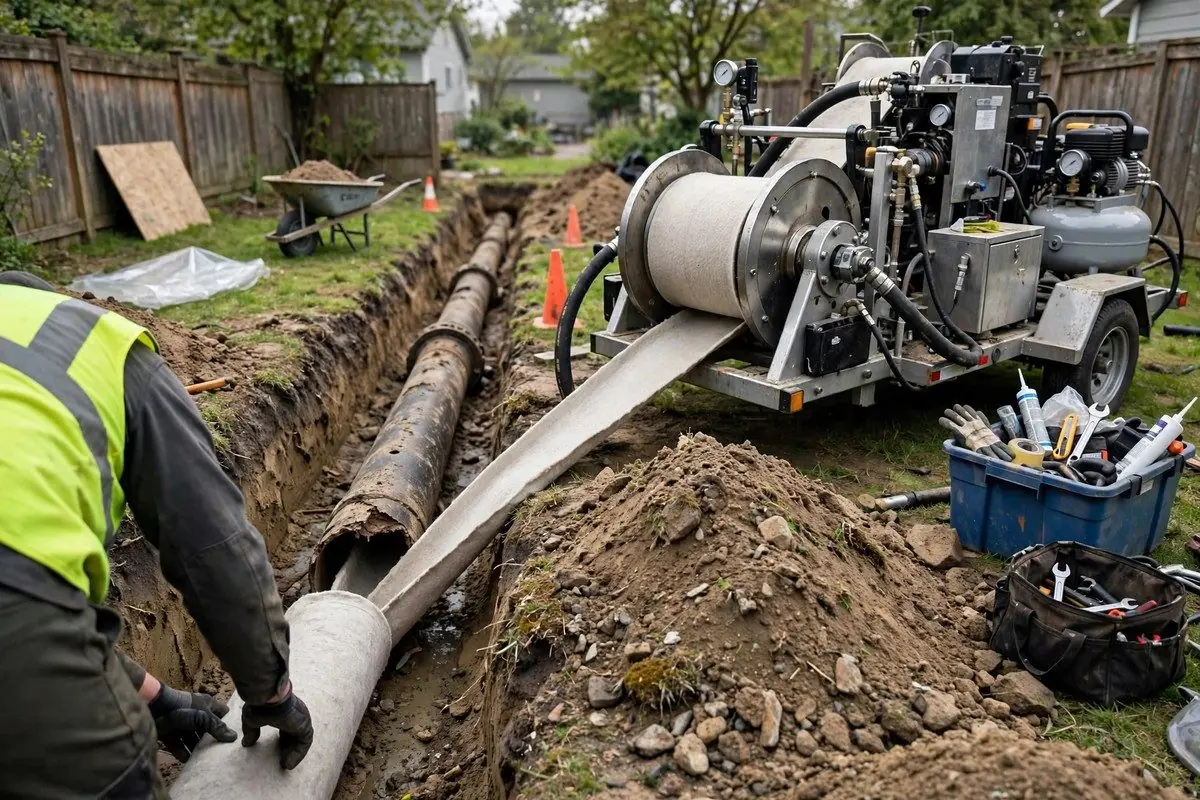
Lining works by pulling a resin-soaked tube into the old pipe and curing it in place, creating a new pipe inside the old one. It needs a pipe that is open enough for the liner to pass and is round enough for the liner to hold its shape. The old line is cleaned, usually by jetting, before the liner goes in.
Because the liner shrinks the diameter slightly, it is a poor fit for a pipe that is already small. We check the size, bends and connections before offering it. Where lining is not suitable, bursting or open-cut replacement takes its place. Our hydro jetting page explains the cleaning step that comes first.
Permits, utility lines and digging safely
Digging for a sewer repair needs planning. Idaho law requires a call to the Dig Line utility locating service before excavation so that buried gas, electric and telecom lines are marked. We make that call, and the marks show where we can and cannot dig. The City of Post Falls issues plumbing permits and inspects sewer repairs, and we schedule the inspection after the work.
If your line runs under a driveway, a patio or a mature tree, tell us before we arrive. Those details shape the choice between open cut and trenchless and may avoid unnecessary damage to your yard.
Repeated backups? Get the line inspected
Call our 24/7 line. We will send a plumber who can camera the line and talk through repair options.
What drives the price of a sewer line repair
We give a clear price before work starts, based on what the camera shows.
Standard homeowner policies often exclude wear-related sewer failure but may cover sudden backup damage if you have that rider. Check with your insurer. Call (208) 679-8357 for a clear price. Replacement pipe, slope and cleanout placement follow the Uniform Plumbing Code (UPC).
Sewer line repair questions in Post Falls
Yes. The 24/7 line is staffed at all hours. We dispatch a licensed plumber who can clear the immediate blockage and plan the repair.
A line that clogs again within weeks, drains gurgling in several fixtures and wet spots in the yard point to damage. A camera inspection confirms it.
No. It suits pipes that are still round and open. A collapsed or badly offset pipe often needs open-cut replacement. We explain which fits your line.
Usually yes. The City of Post Falls issues plumbing permits and inspects the work. We handle the permit and the inspection.
The City or the sewer district generally owns the main in the street and the homeowner owns the lateral to the connection. Ask the City to confirm where the line of responsibility sits for your address.
Cutting roots gives temporary relief. A liner or replacement seals the joints, which is what stops regrowth into the line. See sewer line cleaning for maintenance options.