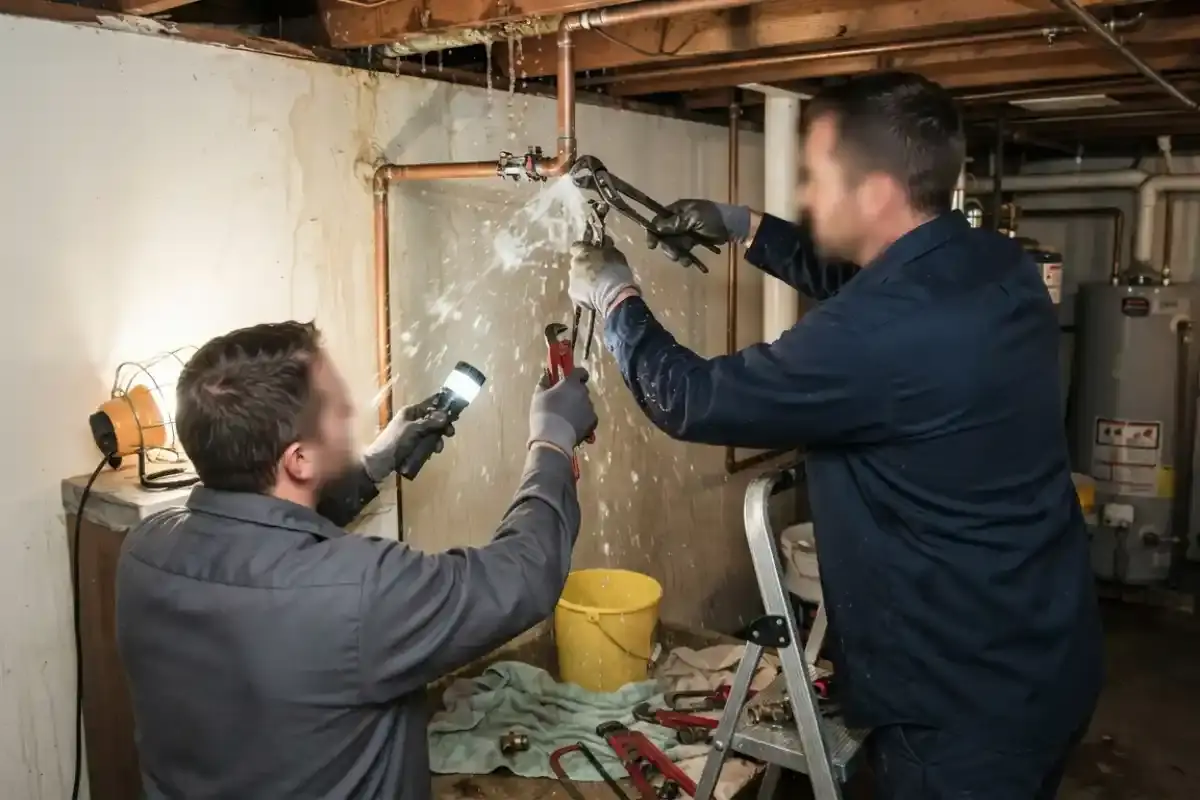
Water is pouring out. Do this first
Find the main shutoff valve and turn it clockwise until it stops. In most homes it is where the water line enters the house, near the water heater, in a basement or in a utility closet. Then open the lowest faucet to drain the lines, switch off power to any wet area only if you can reach the breaker panel safely, and call us.
- Close the main water valve, then open a low faucet to drain the lines.
- Turn off the water heater to protect the elements or burner.
- Move valuables out of the wet area and remove standing water if it is safe to do so.
- Photograph everything before cleanup and call your insurer after calling us.
Frozen pipes: thaw, do not force
If a faucet runs slow or not at all in freezing weather, a pipe is probably frozen. Open the faucet so that water can flow as the ice melts. Warm the pipe slowly with a hair dryer, a heating pad or warm towels. Never use an open flame, a torch or a space heater near flammable material.
A frozen pipe is not yet a burst pipe, but it is a warning. Ice expands and can split the pipe, and the leak often does not show until the ice melts and pressure returns. After you thaw a pipe, check along its length for drips or damp spots. If you cannot find or reach the frozen section, call us.
Why pipes burst in North Idaho
Kootenai County sees cold snaps that drop well below freezing. Pipes in unheated garages, crawlspaces, exterior walls and attics are the usual victims. In January 2024, a hard freeze across the Inland Northwest left many local plumbers busy with split pipes and flooded homes. The lesson was consistent: pipes that were not insulated or were exposed to drafts failed first.
Prevention is simple and worth doing before winter. Insulate exposed pipes, seal gaps where cold air enters, disconnect and drain outdoor hoses and let a trickle run from a faucet on an exterior wall during a deep freeze. If you will be away, keep the heat on at a low setting, around fifty-five degrees, and ask someone to check the house.
Where pipes burst and what the repair involves
The location shapes the repair and the cleanup.
| Location | Typical cause | Repair |
|---|---|---|
| Exterior wall or hose bib | Frozen water inside the pipe, split in the wall | Open the wall, replace the section, restore the insulation |
| Crawlspace or garage | Unheated space, no insulation | Replace the failed length, add insulation or heat tape |
| Attic | Missing insulation over the line | Replace the section, then insulate |
| Under a sink | Cold air through a cabinet on an exterior wall | Replace the supply line, open the cabinet door in a cold snap |
| Buried line | Ground frost or stress at a fitting | See water line repair |
After the water stops: drying, mold and insurance
Standing water must come out and wet materials must dry fast. Wet drywall, insulation and carpet start to grow mold within a couple of days if left damp. We stop the leak and repair the pipe, and a water damage restoration company handles drying and mold prevention. If you have a good relationship with one, call them as soon as the water is off.
Document the damage before you clean. Take photos and short videos of the pipe, the wet areas and damaged belongings. Keep the failed pipe section if you can, since an insurer may want to see it. Our invoice describes the cause and the repair, which helps your claim.
Natural gas and safety around floods
Water and electricity do not mix. If water has reached outlets, appliances or the panel, do not stand in the water to turn off the breaker. Call us or the utility and wait. If you smell gas at any point, leave the building and call the gas utility or 911 from a safe distance.
Do not use a gas appliance, including a water heater or a furnace, that has been flooded until it has been checked. Contaminated water from a sewer backup is a separate matter, and our sewer line cleaning page covers that case. For small or slow leaks that you cannot locate, leak detection is the right step.
Burst pipe? Call the 24/7 line now
Shut off the main and call. We will guide you while a plumber heads your way.
What affects burst pipe repair pricing
We give a clear price before repair work begins, after the water is under control.
Sudden burst pipes are often covered by homeowner insurance for the water damage. Ask your agent about the pipe repair itself. Call (208) 679-8357 now. Repairs follow the Uniform Plumbing Code (UPC), and permanent fixes are tested under pressure before a wall is closed.
Burst and frozen pipe questions from Post Falls homeowners
Yes. The 24/7 line is open at all hours, including holidays. We dispatch a licensed plumber and guide you through shutting the water off.
Look where the water line enters the house, often near the water heater, in the basement or in a utility closet. If you cannot find it, we can help on the phone.
You can try warm towels or a hair dryer with the faucet open. Never use a flame. If you cannot find the frozen section, call us.
Many policies cover the resulting water damage. Coverage for the pipe itself varies, so ask your agent.
Yes. We open the smallest access that works, make the repair and tell you what is left for drywall repair. See also repiping if the pipes are failing repeatedly.