
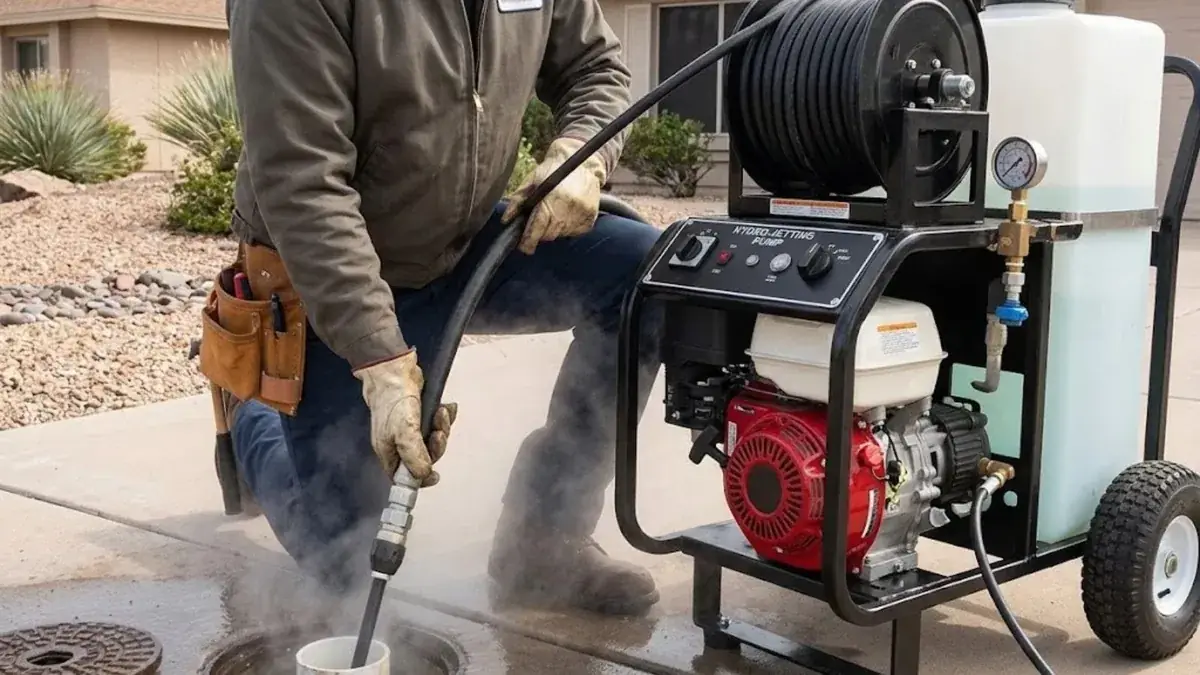
What hydro jetting does
A hydro jetter pumps water at high pressure through a hose with a specially shaped nozzle. The jets pointed backward pull the hose down the pipe, and the water scours grease, scale, sludge and roots from the pipe wall. Unlike a cable, which pokes a hole through a clog, a jetter cleans the whole circumference of the pipe.
The pressure used on residential lines is lower than the pressure a pressure washer can reach, and technicians adjust it to the pipe. Even so, the method is a poor match for a pipe that is already failing. That is why the first step is a look inside.
Pipe materials and how they respond
Material, age and condition all decide whether jetting is wise.
| Material | Typical response | Notes |
|---|---|---|
| PVC and ABS | Jets well | Modern plastic pipe handles jetting at normal pressures |
| Cast iron in good condition | Jets well | Removes scale and tuberculation that cable leaves behind |
| Clay with sound joints | Often fine | Care needed at joints and with roots |
| Clay with offset or cracked joints | Risky | Water can wash soil in and worsen the break |
| Fiber pipe (Orangeburg) | Not recommended | The pipe deforms and delaminates |
| Collapsed or flattened pipe | Do not jet | Needs repair first |
Why the camera comes first
A camera shows what the pipe is made of and how it is holding up. A technician looks for cracks, offsets, roots, belly sections and scale. If the pipe is sound, jetting proceeds. If it is damaged, the plan changes to repair.
A camera pass after jetting shows the result, and the recording is useful if you ever sell the house. Our sewer inspection page explains the process and what we look for.
Older homes and what we tend to find
Houses built before the plastic era may have cast iron, clay or fiber pipe in the lateral. Cast iron scales and thins. Clay joints let roots in. Fiber pipe softens and collapses over time.
Each of these tells a different story, and the camera shows it. A line that is old but sound may benefit from a good cleaning. A line that is thin, cracked or flattened needs a repair, and jetting would only delay the inevitable.
What homeowners can do to prepare
Know where the cleanout is, and keep it clear. Note how often the line clogs and what fixtures are affected. Mention any earlier problems, such as a cable that got stuck or a previous repair.
Ask the plumber what pressure they plan to use and what they will do if the camera shows damage. A good technician will answer plainly. Our hydro jetting page explains how we plan the work.
Older pipes, roots and permits in Post Falls
Post Falls has grown quickly, and older homes around downtown may still have their original sewer laterals. If a camera inspection finds damage, a repair needs a plumbing permit, and the City of Post Falls Building Division at (208) 773-8708 handles it. Before any digging, Idaho's Digline service marks buried utilities. Cleanouts and sewer repairs follow the Uniform Plumbing Code (UPC). Lake city homes also have older laterals, and our Coeur d'Alene service page explains how we inspect them.
Signs your line may not be ready for jetting
A cable that snagged or stopped short in an earlier visit is a warning. So is a line that has backed up in the same place for years, a yard with a sunken strip above the line and drains that gurgle when the washer runs. Each of these can point to an offset, a belly or a break.
Tell the technician about them. They shape the plan, and they are the reason a camera goes in before any water does. A short, honest look at the footage tells you more than a guess ever could, and it protects you from paying to clean a pipe that needs a repair.
After the jetting: keeping the line clean
A freshly jetted line stays clean longer, but it does not stay clean forever. Kitchen grease, wipes and roots all return if the habits and the pipe stay the same. A yearly or every other year cleaning is common for lines with a history of roots.
Keep grease out of the sink, keep wipes out of the toilet and consider a camera check every few years on an older line. Catching a small offset early is far cheaper than a collapse. If a root problem returns each year, the joint is likely open, and a repair or liner is the longer-term fix.
Questions to ask before you hire
Ask whether the company uses a camera before and after the job, and whether you get the recording. Ask what water pressure and what nozzle they plan to use for your pipe size and material. Ask what happens if the camera shows a crack or an offset.
A plain answer is a good sign. A company that jets every line the same way without looking first is guessing. We would rather tell you the pipe cannot take it than flood a weak joint and leave you with a bigger problem.
Wondering if jetting is safe for your line?
Call us. We camera first and tell you honestly what the pipe can take.
If jetting is not an option
A damaged line has several paths. A spot repair fixes a short section. Lining restores a pipe that is cracked but still round. Replacement is the answer for a collapsed or fiber pipe.
Our sewer line repair page explains these options and what affects the price. If you are in Coeur d'Alene, our Coeur d'Alene page explains how we dispatch from Post Falls, and for emergency backups we also run a 24/7 line.
Hydro jetting questions from Post Falls homeowners
Not if the pipe is sound. A camera check first shows whether the pipe can take it.
Usually yes, when the pipe is in good condition. It removes scale that cables leave behind.
Fiber pipe is a poor candidate. It deforms and delaminates, so we do not recommend jetting it.
Yes, with a cutting nozzle, but roots regrow if the joint is open. A repair or liner may be needed.
Usually a few hours, including camera passes.