
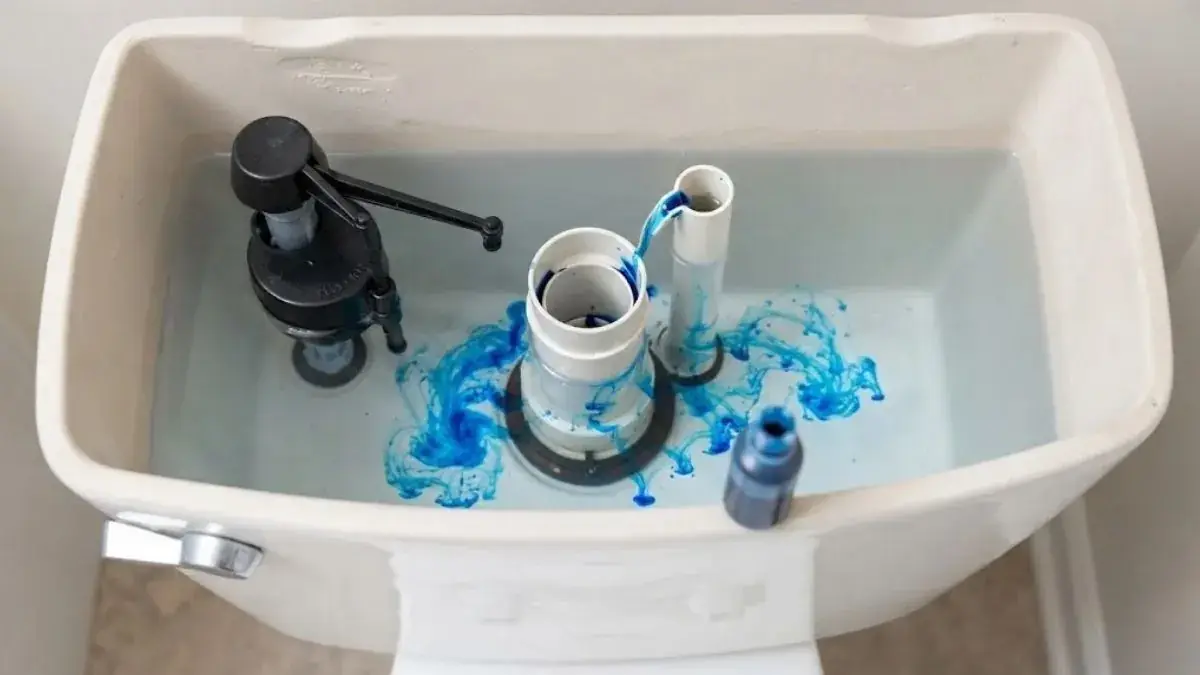
What the flapper does
The flapper is the rubber seal at the bottom of the tank. When you flush, the handle lifts it, the tank empties into the bowl and the flapper drops back to seal the opening. The tank refills, and the float shuts the water off at the right level.
Over time, the rubber hardens, warps or collects mineral buildup and no longer seals. Water trickles into the bowl, the tank level drops and the fill valve turns on to replace it. That is why a toilet with a bad flapper runs, hisses or refills on its own every few minutes.
Confirm the problem with a dye test
Lift the tank lid and add a few drops of food coloring to the tank water. Do not flush. Wait about twenty minutes and look in the bowl. If color appears, the flapper is leaking and a replacement will fix it.
If no color appears, the leak may be at the fill valve or the overflow tube. A water level that sits above the top of the overflow tube spills into the bowl and sounds the same. Lowering the float or adjusting the fill valve fixes that, and no new flapper is needed.
Pick the right flapper
Flappers are not universal. Many modern toilets use a two inch flapper, and many use a three inch one for a larger flush valve. Others have a specific shape tied to the brand and model. Take the old flapper to the store, or read the model on the inside of the tank, to match it.
Look at how the flapper attaches. Some have ears that snap onto pegs on the overflow tube. Others have a ring that slides over the tube. Universal flappers exist and work in many toilets, but they need correct chain length and a snug fit.
Steps to replace it
Work calmly and keep the water off until you are done.
- Close the supply valve behind the toilet and flush to empty the tank.
- Unhook the chain from the flush handle arm.
- Pull the old flapper off its pegs or slide the ring off the tube.
- Clean the flapper seat with a soft cloth to remove scale.
- Attach the new flapper, hook the chain with about half an inch of slack and open the water.
- Flush a few times and run the dye test again.
Troubleshooting after the swap
A new flapper should fix the problem. If it does not, check these.
| Symptom | Likely cause | Fix |
|---|---|---|
| Still runs | Chain too tight or too long | Adjust to half an inch of slack |
| Flapper closes too fast | Wrong flapper for the model | Match the flapper to the flush valve size |
| Water leaks at the seat | Scale or a nick in the seat | Clean or smooth the seat |
| Weak flush | Water level too low in the tank | Raise the float or fill valve |
| Hissing continues | Failing fill valve | Replace the fill valve |
Water use and a running toilet in Post Falls
A running toilet can waste a lot of water in a day, and the Post Falls Water Division bills for what the meter records. If your bill jumps for no reason, the meter test on our leak detection page tells you whether water is moving when everything is off. You can ask the Water Division at (208) 777-9857 about usage history on your account.
Fixing a flapper is often the cheapest way to lower a bill. Federal rules and the Uniform Plumbing Code (UPC) set maximum flush volumes, so choose a flapper made for your model and do not modify the tank to force a weaker flush. Living near the lake? Our Coeur d'Alene coverage details show how dispatch works when a toilet fix goes wrong.
Other parts inside the tank worth a look
While the lid is off, check the fill valve, the float and the refill tube. A fill valve that hisses or leaks after the tank is full needs adjustment or replacement. The refill tube should point into the overflow tube and not sit below the water line, or it can siphon water backward.
Look at the flush handle and chain as well. A handle that sticks keeps the flapper lifted a moment too long, and a chain that tangles can hold it open. A few minutes of tidying inside the tank often fixes a flush that seemed to need a new toilet.
How much water a leaking flapper can waste
A flapper leak is easy to ignore because it is quiet. The tank refills in short bursts, often at night, and the water goes straight down the drain. Over a month, the total can be far more than a household would use in a bath.
A quick test with a stopwatch makes it real. Note how often the fill valve starts. If it runs several times an hour with no one using the toilet, the repair is overdue and worth doing today.
Toilet still running?
Call us. We repair and replace toilets, and we can find leaks you cannot see.
When it is more than a flapper
If the flapper is new and the toilet still runs, look at the fill valve. A fill valve that sticks or leaks needs a replacement, and kits cost little and install in minutes. A cracked overflow tube or a worn flush valve seat is a bigger repair, and older toilets may be near the end of their life.
If the toilet rocks, leaks at the floor or clogs often, the cause is elsewhere. Our toilet repair page covers those cases, including wax rings and flanges. For a toilet that overflows, see our guide to a clogged toilet and our drain cleaning page.
Small fixes that pay off
A yearly look inside the tank takes a minute. Check the chain, the flapper and the fill valve. Do the dye test twice a year, since a slow leak is silent.
If you live in a rental or manage one, tell tenants to report running toilets quickly. The water is the cost, and a flapper is the cure. If you are in Coeur d'Alene and need a plumber, our Coeur d'Alene page explains how we dispatch from Post Falls.
Toilet flapper questions from Post Falls homeowners
Run the dye test. If color from the tank shows up in the bowl without flushing, the flapper is leaking.
It varies with water and use. Mineral buildup and chemical tank cleaners shorten it.
They can attack rubber and shorten the life of a flapper. Many plumbers advise against them.
Most toilets use a two inch or a three inch flapper. Match it to your flush valve and your model.
Call if a new flapper does not stop the running, or if the toilet leaks at the base or clogs often.