
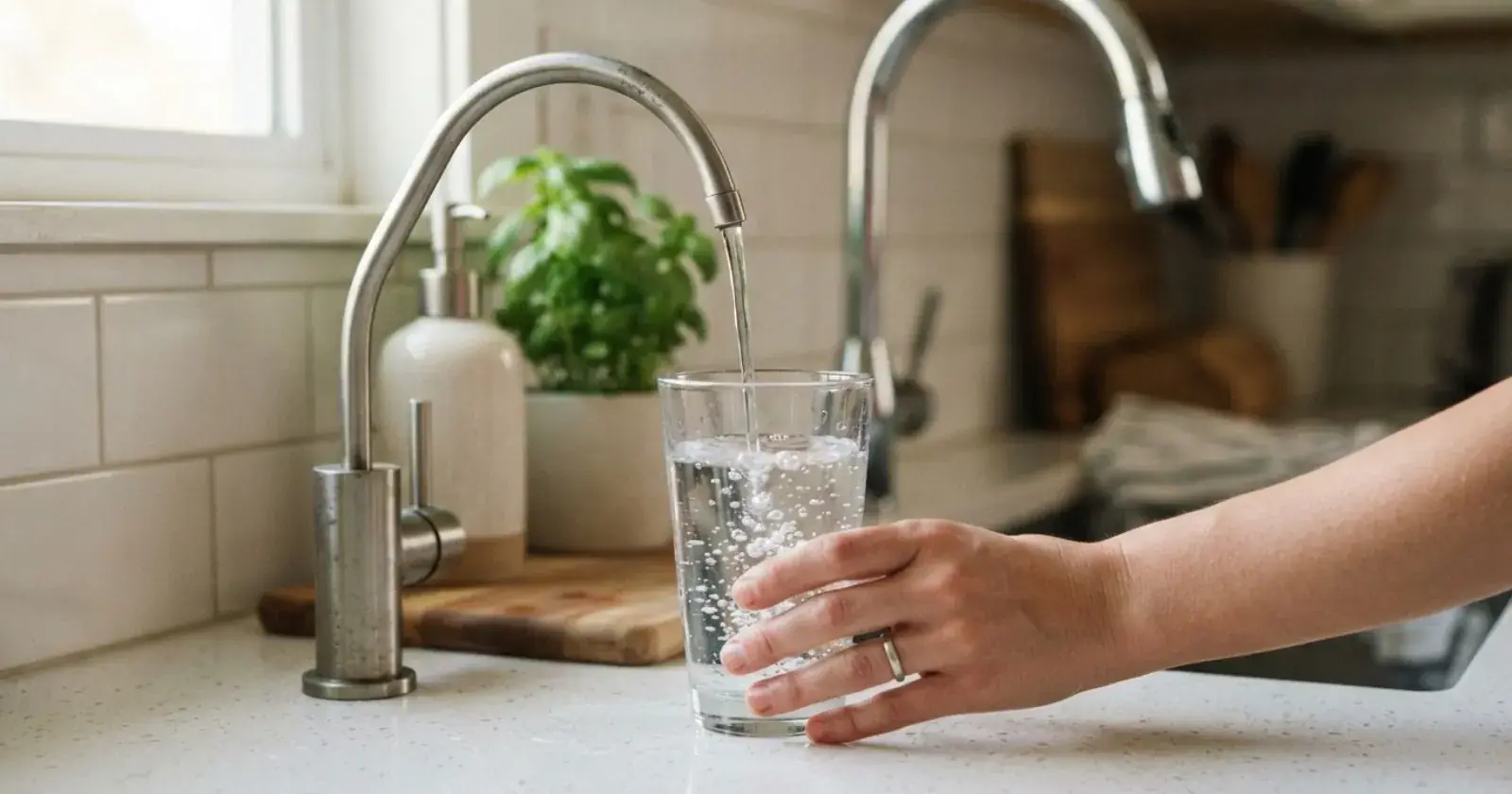
What reverse osmosis does
A reverse osmosis system sits under the kitchen sink and pushes water through a very fine membrane. The membrane removes many dissolved substances, including salts, metals and some chemicals, and the treated water flows to a dedicated faucet. The system includes pre-filters, a storage tank and a drain line for the rejected water.
It treats a small volume, a few gallons a day, and it wastes some water in the process. It is a drinking-water solution, not a whole-house one. The membrane and filters need replacing on a schedule, and the tank needs a place under the sink.
What whole-house filtration does
A whole-house system installs on the main water line and treats all the water that enters the home. Depending on the design, it may be a sediment filter, a carbon filter for chlorine and taste, or a specialized unit for iron or sulfur. A softener, which handles hardness, is a related but separate device.
Whole-house systems protect fixtures, heaters and appliances and improve water at every tap, including showers. They do not make water as pure as reverse osmosis, and they need a bypass, a drain and regular cartridge or media service.
Side-by-side comparison
The best choice depends on the problem you want to solve.
| Question | Reverse osmosis | Whole-house filter |
|---|---|---|
| What does it treat? | One tap, for drinking and cooking | Every tap in the home |
| Best for | Dissolved solids, taste and specific contaminants | Chlorine taste, sediment, iron and sulfur |
| Installation | Under the sink, small drain connection | On the main line, needs space and a drain |
| Upkeep | Filter and membrane changes | Cartridge or media service |
| Waste water | Yes, some | Depends on design |
Start with a water test
The right equipment depends on what is in your water. Scale suggests hardness. A rotten egg smell points to sulfur. Orange stains point to iron. A lab test or a certified home kit at your own tap shows what you have.
Without a test, you may buy a system that does not address your problem. A carbon filter will not remove hardness, and a softener will not fix a taste problem. We recommend testing before any purchase, and our water softener and filtration page explains how we match equipment to a confirmed need.
Local water information for Post Falls
The City of Post Falls Water Division publishes an annual water quality report, and you can request it by calling (208) 777-9857. That report describes the City's water, but it does not tell you what happens inside your home's pipes or at the tap. We do not assume a hardness number for any home, so test your own tap first.
If your home is on a private well instead of City water, a lab test is even more important. Check for NSF/ANSI 58 certification on a reverse osmosis system and NSF/ANSI 42 or 53 on filters, and installation follows the Uniform Plumbing Code (UPC). For installs in Coeur d'Alene, check our city page for how scheduling and permits work there.
Costs to keep in mind beyond the purchase
The price of the equipment is only part of the picture. Reverse osmosis needs filter and membrane changes, and a whole-house system needs cartridges or media service. Salt-based softeners need salt refills and some water for regeneration.
Ask for a list of the recurring parts and how often they are due, then add them up for a few years. A cheaper system with expensive cartridges can cost more over time than a pricier one with simple upkeep. We explain the ongoing costs before you commit.
Taste, smell and what they tell you
Your senses are a rough guide. A chlorine taste points to a carbon filter. A musty or earthy smell may come from the water source or from the plumbing. A metallic taste can come from iron, copper or a corroded pipe. None of these is a diagnosis, and some contaminants have no taste at all.
That is the reason a test beats a guess. If the taste changes suddenly, or the water looks cloudy or colored, tell the plumber and the Water Division. A change you can sense is worth checking before you spend on equipment.
A simple way to decide
Start with the problem you want to solve. If it is the taste of drinking water, a reverse osmosis unit at the kitchen sink is the direct answer. If it is scale on fixtures and shorter heater life, a softener comes first. If it is chlorine smell in every shower, a whole-house carbon filter fits.
Write the problem down, test the water, then match the equipment to the test. That order keeps you from paying for a feature you will never use.
Not sure what your water needs?
Call us. We can explain the options and install what your test supports.
Can you use both?
Yes. Many homes use a whole-house filter for chlorine and sediment and a reverse osmosis system at the kitchen sink for drinking water. A softener may sit upstream of both if hardness is the issue. Order matters, because each device protects the next.
A plumber can lay out the right order and install bypass valves and drains. Our plumbing installation page explains how we plan the work. If you are in Coeur d'Alene, our Coeur d'Alene page explains how dispatch works from Post Falls.
What to ask before you buy
Ask what the system removes, and ask for the independent test results behind the claim. Ask how often the filters need replacing and what they cost. Ask where the drain line will go and how much water the unit wastes.
Be wary of a sales visit that offers a free water test and a big discount for signing the same day. A test you run yourself or send to a lab is more reliable, and a plumber who installs the equipment will not push you into a system you do not need. For water heater impact, see water heater replacement, which explains how scale shortens a tank's life.
Water filtration questions from Post Falls homeowners
They do different jobs. Reverse osmosis treats one tap for drinking. A whole-house filter treats every tap for taste, sediment or iron.
Only if your test shows hardness is a problem. A softener removes hardness minerals and is separate from a filter.
Use a home test kit or a lab test at your tap, and ask the Water Division at (208) 777-9857 for its annual report.
Yes, a system rejects some water as it works. The amount varies by design.
Yes, if it suits your water. We install bypass valves and drains to code.