
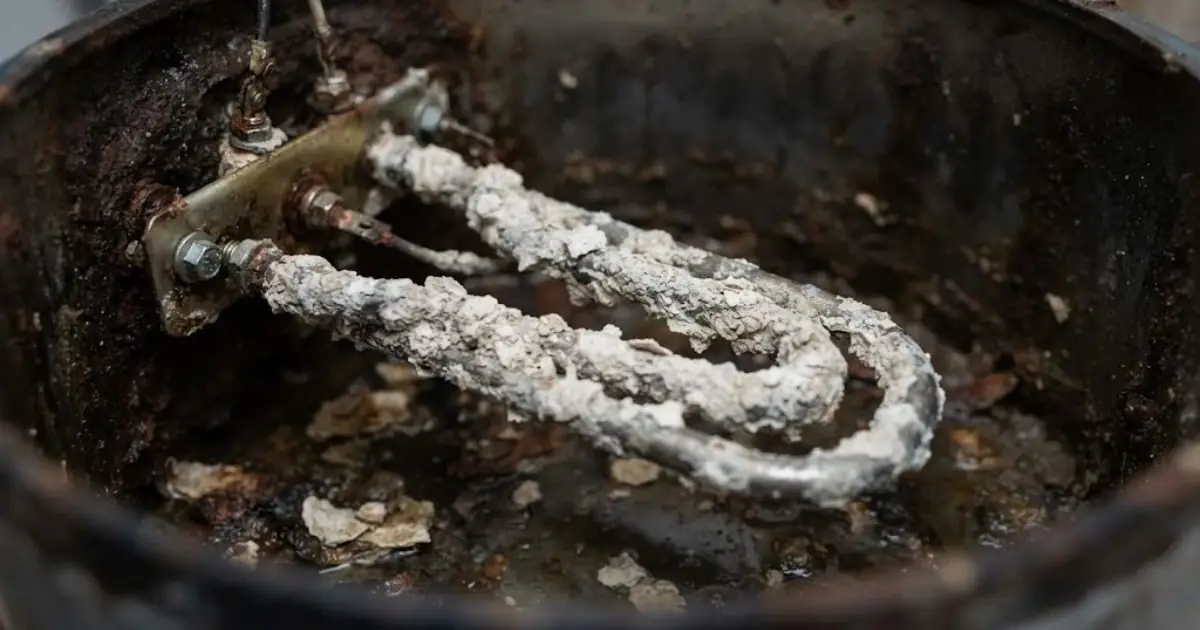
How the elements work
An electric tankless heater passes water through a chamber with one or more heating elements. A flow sensor detects water moving and switches the elements on, and a temperature sensor adjusts the power to hit the set temperature. Larger units have several elements, and they switch on in stages as demand rises.
This design needs a lot of electricity. A whole-house electric tankless heater may draw a large load on dedicated circuits, which is why panel capacity matters. When one element fails, the unit may still heat, but it will not keep up with a long shower or two fixtures at once.
Signs an element is failing
The most common sign is hot water that cools partway through a shower. Others include a unit that takes longer to warm, one that trips the breaker, a display error code and a heater that works for a single sink but not for a shower and a dishwasher at once.
Scale is a frequent cause. Minerals coat the element, insulate it from the water and make it overheat. An overheated element burns out or trips its limit switch, so the symptom looks like a failed element when the root cause is buildup. Flushing and cleaning can help in early stages.
Safe checks before you call
These checks are safe for most homeowners and tell the technician a lot.
- Check that the breakers for the heater are on and have not tripped.
- Note any error code on the display and look it up in the manual.
- Run one hot tap alone and see whether the water heats.
- Clean the inlet screen if the manual says how.
- Write down when the symptoms began and what changed.
Element problems and how a technician tests them
Testing needs a multimeter and a safe way to isolate power.
| Problem | Test | Result |
|---|---|---|
| Burned-out element | Resistance reading across the element | No reading or a very high one means replace |
| Shorted element | Reading to ground | Any continuity to ground means replace |
| Tripped limit switch | Check and reset the high limit | Find out why it tripped before resetting |
| Scaled exchanger | Visual check and flow test | Flush or descale |
| Weak power supply | Voltage and breaker check | Electrician for circuit issues |
Replacing an element
A technician shuts off the power at the breaker, confirms it with a tester and closes the water. The cover comes off, the element is disconnected and replaced with the exact part for the model, and the connections are tightened to specification. The unit is then refilled, purged of air and tested.
Electric work in a wet environment demands care. Always shut off the breaker, test for power and keep the heater's own disconnect where it can be reached. If you are unsure of any step, call a professional. Our tankless water heater service page explains how we handle repairs.
Hard water, cold winters and electric tankless units
The Post Falls Water Division publishes an annual water quality report, and you can request it at (208) 777-9857. We do not assume a hardness number, so test your own tap before you decide how often to descale. In North Idaho winters, an electric tankless heater is most vulnerable in an unheated garage or on an outside wall.
A power outage during a deep freeze can freeze the unit, so ask us about protecting it. Electrical work on a tankless heater follows the National Electrical Code (NEC), which is why the breaker and the disconnect matter. Homeowners in Coeur d'Alene can read our local service details before booking an element repair.
What a repair visit usually costs you in time
Most element replacements take a couple of hours once the right part is on hand. The slow part is often finding the exact part for an older model. Give the technician the model and serial number when you call, and they can check ahead.
If the visit uncovers a deeper problem, such as a failed control board or a panel that cannot carry the load, the plumber will explain the options before doing more. We would rather you hear the facts first than approve a surprise.
Sizing and load: why elements work so hard
An electric tankless heater has to raise cold water to shower temperature in a few seconds, and in a cold season the incoming water is colder, so the elements work harder. A unit sized for a mild climate can struggle in midwinter, with the output temperature drifting down as demand rises.
That is why sizing matters. Count the fixtures that run together and the temperature rise you need, then compare the total with the unit's rated flow. A unit that is too small will run its elements flat out and age quickly. If your heater cannot keep up in winter, the fix may be a second unit or a different type of heater instead of a new element.
Tankless heater lukewarm?
Call us. We repair, flush and replace tankless heaters.
Is an electric tankless heater right for your home?
Electric tankless heaters save space and give endless hot water, but they need large electrical capacity. A house with an older panel may need an upgrade, and the cost can outweigh the benefit. A gas tankless unit needs a larger gas line and venting instead.
If you are weighing the options, our water heater installation page lays out the planning steps, and water heater replacement explains how we compare tank, hybrid and tankless units. If you are in Coeur d'Alene, our Coeur d'Alene page explains how dispatch works from Post Falls.
Keeping elements healthy
Flush the unit yearly, or more often if you see scale on fixtures. Keep the inlet screen clean. Protect the unit from freezing and make sure the breaker and wiring are in good order.
A water softener upstream can reduce scale. Test your water first so you buy the right equipment. Our water softener and filtration page explains the options and why we recommend testing before you buy.
Electric tankless questions from Post Falls homeowners
One element may have failed, or scale may be insulating them. A technician can test them.
It is possible for a handy homeowner with the right part and a way to confirm the power is off. If you are unsure, hire a professional.
Yes. Scale insulates the element and makes it overheat, which shortens its life.
Check the breaker first. If it is tripped, reset it once. If it trips again, call a technician.
It may not. A plumber and an electrician can check the capacity before you buy.