
Signs that your pipes are at the end of their life
Repeated pinhole leaks are the clearest sign. Low pressure that gets worse over time, rusty or brown water when you open a tap and visible corrosion or green stains on copper also point to aging pipe. Galvanized steel rusts from the inside until the opening is small, and it chokes the flow.
One leak is a repair. Three leaks in two years in the same system is a pattern. If your home was built in the middle of the twentieth century and still has its original supply lines, a camera on the water side is not possible, but a pressure test and a look at exposed pipe tell us a lot.
Pipe materials we see and what they mean
The material in your walls decides whether repair or replacement is the better path.
| Material | Era and signs | Our usual advice |
|---|---|---|
| Galvanized steel | Older homes, rust-colored water, falling pressure | Replace, since corrosion inside cannot be reversed |
| Polybutylene (gray plastic) | Homes built in the late 1970s through the mid 1990s | Replace, since the material is known for failures at the fittings |
| Copper | Long-lived but can pit from acidic or aggressive water | Repair a single leak, replace if pinholes keep appearing |
| CPVC | Can turn brittle with age and heat | Inspect and replace where cracks appear |
| PEX | Modern flexible tubing | Often the choice for the new lines |
PEX, copper or something else
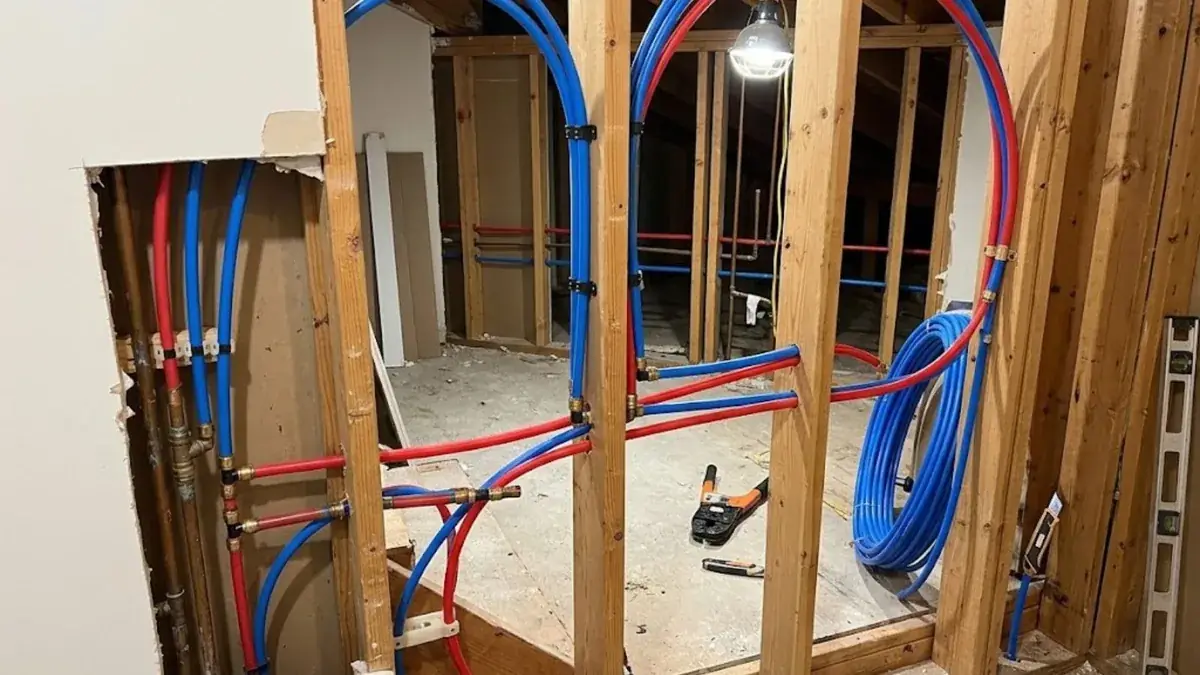
PEX tubing is flexible, resists freezing damage better than rigid pipe and needs fewer fittings, which makes it fast to install in finished walls. Copper is durable and familiar but costs more and takes more time. Each has a place. In a house with a history of aggressive water, copper may be a poor fit, and PEX may last longer.
We explain the options in plain language and use the material that suits your house and the code. In Idaho, PEX is permitted under the plumbing code for water supply, and the City inspects the finished work.
How a repipe goes, step by step
A whole-house repipe usually takes a few days. We shut the water off, drain the system, cut small access holes in the walls and run new lines through them. New lines connect to the main shutoff, the water heater and each fixture. We pressure test the new system before the walls are closed.
Most of the work happens in attics, crawlspaces and the backs of closets, and drywall access is limited to small openings that are patched afterward. Wall patch, texture and paint are separate trades, and we plan the schedule so you are without water for as few hours as possible.
Partial repipe versus whole house
Sometimes only part of the house needs work. A bathroom with failing lines, a kitchen wing or the run from the meter to the house can be replaced alone. A partial repipe costs less, but it leaves old pipe elsewhere that may fail later. We explain the tradeoff and what a reasonable stopping point looks like.
If your leaks are in the buried line between the meter and the house, see our water line repair page. If the leaks are inside walls and the location is unclear, leak detection comes first.
Water quality and pipe wear in Post Falls
Post Falls draws its water from the aquifer under the Rathdrum Prairie. The Water Division publishes an annual quality report, and you can call (208) 777-9857 to request it. Water chemistry affects how quickly copper pits and how scale builds in galvanized lines. We do not assume a number for your tap. If you suspect water quality is shortening the life of your pipes, our water softener and filtration page explains testing and treatment.
Think your pipes need replacing?
Call us for a conversation and an on-site look. We will tell you honestly whether a repair is enough.
What affects repiping pricing
A clear price is given after we see the house.
Insurance usually does not pay for repiping due to age, but it may pay for damage from a sudden leak. Ask your agent. Call (208) 679-8357 for a clear price. Pipe sizing, supports and pressure testing follow the Uniform Plumbing Code (UPC).
Repiping questions from Post Falls homeowners
Often two to five days, depending on the size of the house and the access. We give a schedule with the price.
Water is off for part of each day. We try to restore service at the end of each working day where the schedule allows.
PEX approved for potable water is permitted by plumbing codes and widely used. We install only approved products.
Not normally, but there is noise and some dust. Many families stay put and plan around the water outages.
It is worth considering when leaks are frequent, pressure is low or the pipe material is known to fail. A leak detection visit can help decide.